


Almost every recruiter who asks me about AI agents opens with the same question. Which tool should I use? It’s a reasonable thing to ask, and it’s the last decision I’d make, because the tool is the easiest part of the whole setup to swap out later.
The harder question is whether you could explain your own process to someone who has never met you. Agent orchestration sounds technical, but for a beginner it mostly means this: one piece of software does a task, hands its result to another piece of software, and that one does the next task. Somebody has to decide what gets handed over, in what shape, and where a human looks at it before it moves on. That somebody is YOU.
I think recruiters are better placed to build this than most people assume, because we already run relay races all day. A hiring manager hands an intake to a recruiter. The recruiter hands a brief to a sourcer. The sourcer hands a shortlist back, and a coordinator picks up the scheduling. Every one of those handoffs is a place where work gets lost, and every recruiter has watched it happen. If you can describe your handoffs clearly, you can build a first agent setup on a quiet afternoon. If you can’t, a better tool will just lose the work faster.
I didn’t learn this at work. I learned it while hunting for a dead man in old church books. That last sentence might seem too dramatic, but it is an interesting story about how agents can be used today, so let me share what I did and how you can do the same, even if you are searching for candidates instead of deceased relatives, as I was.
A tinsmith’s assistant born in 1905
For a while now I’ve been trying to find the parents of my great-grandfather. I know a few things about him. He was born in Prešov in 1905, moved to Poprad in 1923 and worked as a tinsmith’s assistant. After that, the trail goes cold. The records that might help are scanned parish registers, written by hand in Latin and Hungarian, by priests whose handwriting got worse every winter. For weeks I was trying to decode all these texts that remind me of the meme about how doctors write.
So one Sunday, I built a small chain of agents. The first one read scanned register pages and transcribed every entry with a name close to ours. The second took those transcriptions and checked them against what I already knew: dates, places, the names of godparents. The third wrote me a short summary of anything that looked like a match.
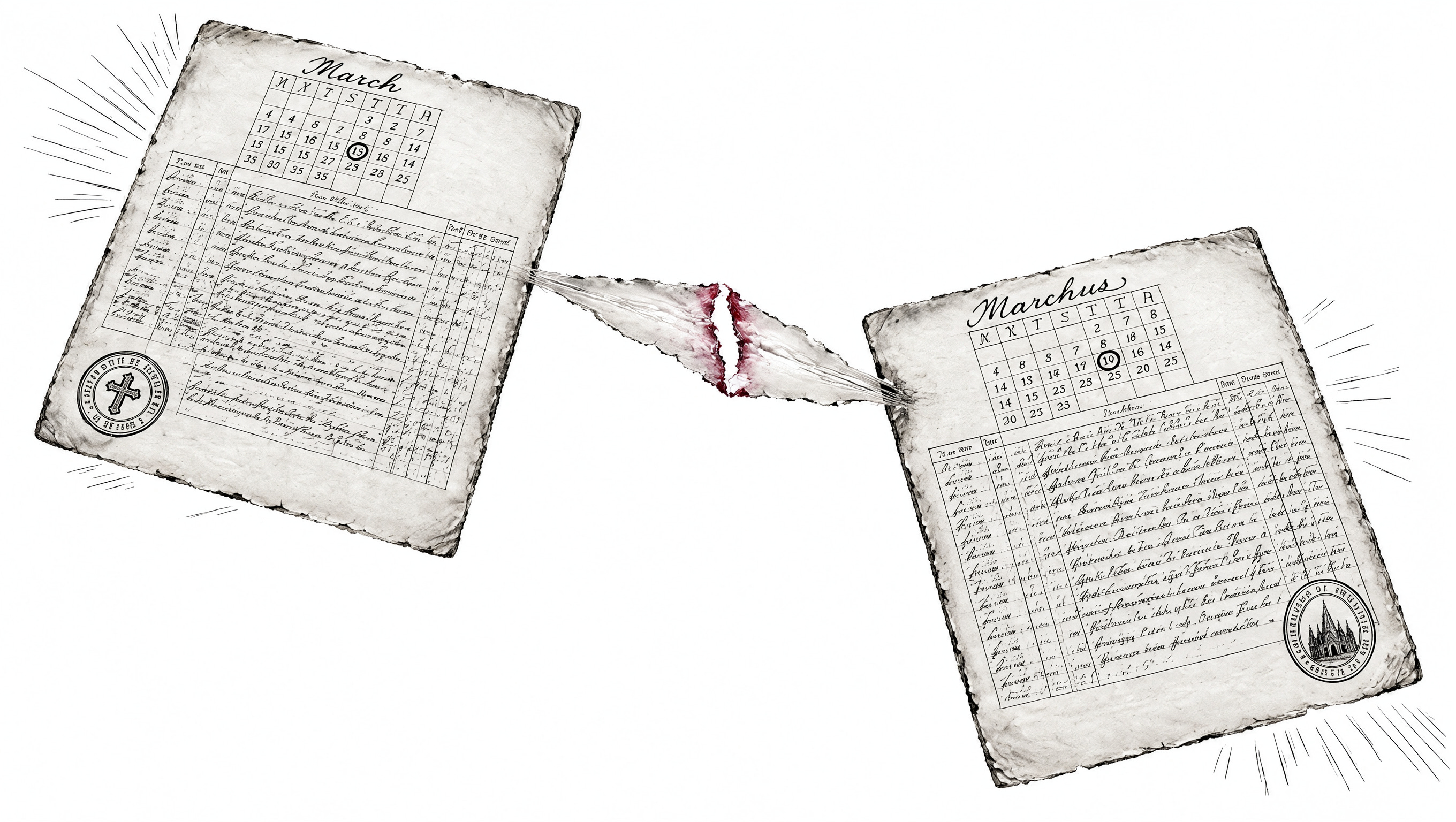
It worked beautifully for about an hour. Then the summary agent told me, with total confidence, that my great-grandparents married on 23 December 1929. The 1930 census says that. The church excerpt I already had says 23 November 1930. The second agent had found both dates, picked the one from the more official-looking source, and passed it on without a word about the conflict. The third agent built a neat paragraph on top of it.
Every agent did its job well, and the reading was fine. What broke was the handoff between them. I’d never told the checker what to do when two sources disagree, because when I do this research myself, I just know to stop and mark it. That knowledge lived in my head, and the agents had no way to reach it.
I added one line to the checker’s instructions: if two sources conflict, keep both, flag it, and stop. The next run was slower and far more useful. That’s one small hobby project, and I can’t promise it scales to anything bigger, but it’s the clearest lesson about agents I’ve had.
Which leaves the question I keep coming back to. What do you know about your own process that you’ve never once written down?
The handover note
Think about the last time a colleague went on holiday and left you their open roles. The good ones leave a note. It tells you which hiring manager answers on Slack and which one only reads email. It tells you which candidate is about to get a counteroffer, where the salary approval is stuck, and which search string works for this role and which one returns 400 profiles of people who once went to a Java meetup.
That note is the closest thing most of us have to an agent specification. It’s written for someone smart who has no context, and an AI agent is exactly that kind of colleague. It can read fast and write well. It has no idea that your hiring manager says “senior” when he means “has shipped something people paid for.”
I’ve spent years teaching people how to talk to AI, and most of the bad output I see comes from missing context. Agents make that problem bigger. When you chat with a model, you notice the bad answer and fix it. When one agent feeds another, the bad answer becomes the next agent’s starting point, and nobody notices until a candidate gets a message about the wrong job.
Let me show you exactly how to set this up, and in the bonus section I’ll drop some tips on configuring Grok Bot, Hermes Agent, OpenAI Dots, or any other agents.
So the beginner version I’d suggest is small on purpose.