


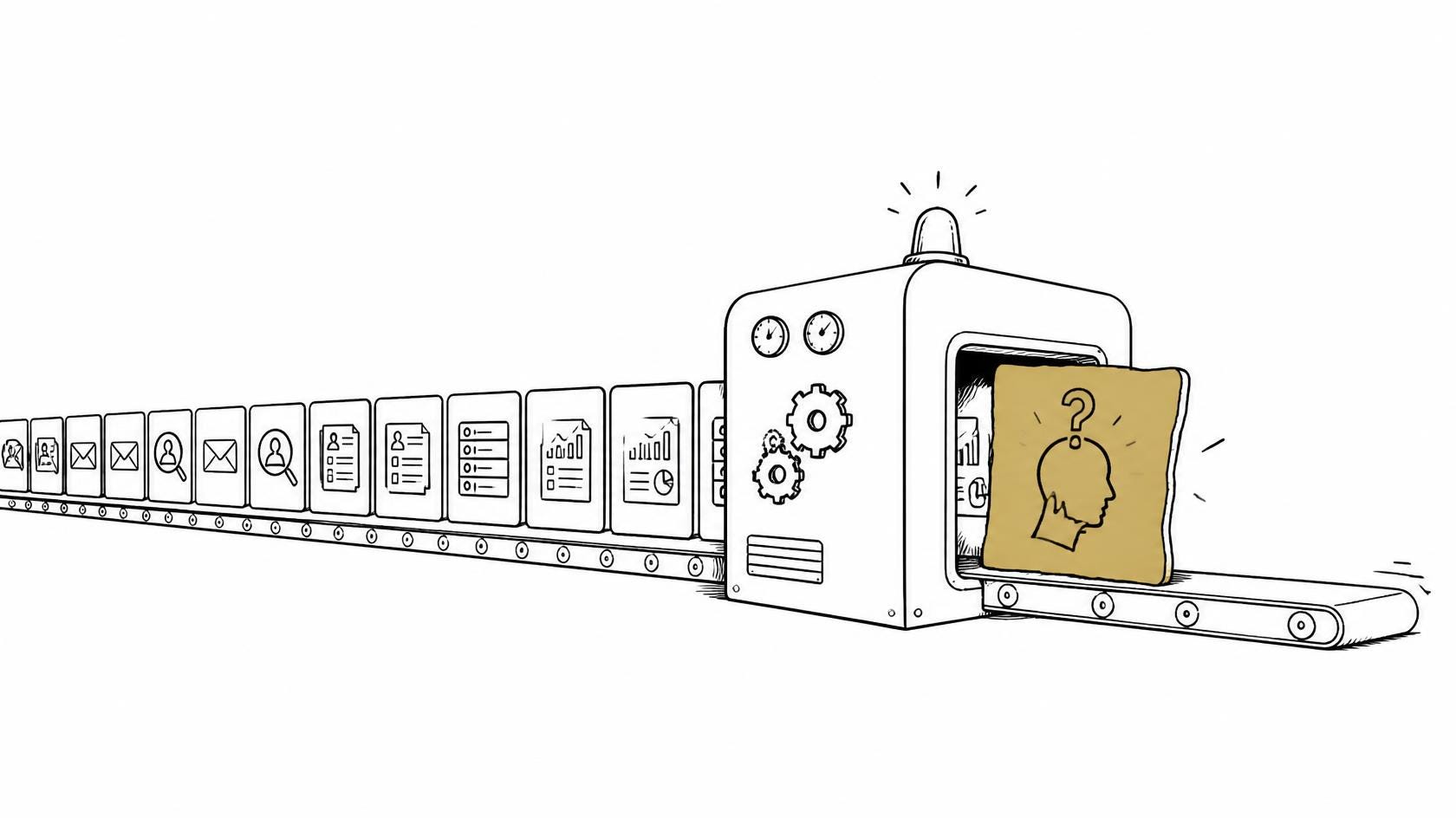
A recruiter who spends most of the week scheduling interviews, rewriting job ads, searching databases, sending outreach messages, and moving candidates through an ATS is going to become a thing of the past. AI can already take a growing share of that work, and the quality is improving fast enough that waiting for the tools to become perfect is a bad career plan.
But if you work in recruitment, as I do, you know our role is constantly changing. So, let’s look ahead to the near future and the next stage in the evolution of recruiting.
The recruiting role is starting to split in two directions.
One path is the Talent Advisor, the person who helps a hiring manager make better decisions about the role, the market, the interview process, and the tradeoffs behind a hire. The other is the Talent Engineer, the person who builds the systems, data flows, AI workflows, rules, and tools that let a talent team produce better work with fewer manual steps.
There is a third direction, but it will apply to a small, rare group of recruiters who combine both skill sets and become something closer to a Talent Architect: someone who can challenge the hiring decision and redesign the system behind it, someone who designs how the company hires by combining business judgment, talent expertise, data, AI, process design, and technology, and someone who will be able not only to run AI agents but also to build them.
Some recruiters will do pieces of both. Smaller companies may need one person to cover both areas for years. Large teams will probably separate them more clearly.
But changing the title on LinkedIn solves nothing. I have seen recruiting functions rename people “partners” while keeping the same job underneath: take the requisition, post it, source names, chase feedback, close the candidate, repeat. The value still sits in delivery volume.
AI is removing parts of that model.
The recruiter queue is getting thinner
Look at the work AI reaches first. It tends to be work one person can change without asking six other people for permission.
Microsoft researchers studied 6,000 knowledge workers in a six-month randomized field experiment. Half received a generative AI tool inside the apps they already used for email, documents, and meetings. Workers with the tool spent 3 fewer hours on email each week. Their meeting time did not change in a meaningful way. The easy-to-change individual work moved first; the work that depended on other people stayed stubborn.
Recruiting has the same shape. The individual work that fills a recruiter’s day, writing messages, summarizing interviews, searching for candidates, updating records, preparing reports, is becoming easier to automate. The harder work sits around decisions that involve other people: challenging a hiring manager, changing a broken interview process, deciding which requirement should move, or getting a team to act differently. That difference is where I would place my career bet.
I’ll use a composite example, because I have seen versions of this scene too many times. A recruiter has an intake, let's say at 10:30 on a Tuesday. At 10:12, they are repairing an ATS export because one column broke after someone added a custom field. When they finally get to the intake, they spend most of it asking questions that could have been collected before the call: location, level, salary, interview stages, and target companies.
The meeting ends. They have “done recruiting” for an hour, yet almost none of that hour required a recruiter.
The intake meeting is one of the most important conversations in the entire hiring process. It is where recruiters align with the hiring manager on the role, understand what the team actually needs, challenge unrealistic requirements, bring market data into the discussion, and show their expertise. AI can support all of that by preparing market insights, summarizing data, suggesting questions, and helping recruiters arrive better prepared.
That example combines several real patterns rather than one person, so it proves nothing on its own. But it does show why parts of the old recruiter workload can disappear without the hiring function disappearing with them.
AI often helps less experienced workers more than experts on routine knowledge tasks. Erik Brynjolfsson, Danielle Li, and Lindsey Raymond studied 5,179 customer support agents using a generative AI assistant. Productivity rose 14% on average, while productivity among novice and lower-skilled workers improved by 34%.
For experienced recruiters, the implication is uncomfortable. If your main advantage is writing a better first message, producing a cleaner summary, or knowing the right Boolean string, AI can spread pieces of that knowledge to everyone else. Experience still counts, but the market will pay less for experience that can be copied into a tool.
Like everyone else, I also still catch myself doing work I know should be automated. Fixing one record feels faster than fixing the workflow that created the bad record. Then I do it again two days later. Old habits survive even when you can see the waste, but I have learned my lesson over the years, so I try to automate things when they are too repetitive or take time I do not have.
Two talent jobs
The Talent Advisor role is the right evolution of the recruiter role; the real Talent Advisor earns influence by improving decisions before recruiting activity starts.
A hiring manager says, “I need another senior backend engineer.” The advisor pauses before opening the requisition and asks what changed in the team, what output is missing, which skills are essential on day one, what can be learned, how the current team is split, and what salary the company can actually support. Sometimes the answer is a different level. Sometimes the role needs a different location. Occasionally the team needs no hire at all.
That last answer creates friction. Recruiters have been trained to prove value through filled roles, activity counts, response rates, and speed. Telling a manager to rethink a role can reduce the very volume used to measure the recruiter.
It can also make you unpopular.
Advisory work asks you to challenge assumptions with evidence. If the manager wants a profile that barely exists in the local market, you need market data and the nerve to say it early. If interviewers reject good candidates for vague “culture” reasons, you need to ask what behavior they observed. If the company pays below what the candidates it wants will accept, a bigger sourcing list will not rescue the search.
I learned this slowly. Early in my career, I thought good service meant saying yes quickly and then working hard enough to make the request possible. There have been searches where I spent far too long trying to solve a broken brief with more sourcing. Sometimes that worked, which made the habit harder to kill. A heroic save teaches the wrong lesson when everyone forgets why the search became heroic.
The engineer path starts somewhere else. A Talent Engineer sees repeated manual work and asks why a person is still touching it.
Candidate notes copied between systems, interview reminders, duplicate checks, sourcing research, scheduling logic, data cleanup, reporting, first drafts, basic rediscovery, and routine follow-ups can all be partly handled by software. The engineer decides what should be automated, where a human must review, which data can move, what can fail, and how the team will know when it fails.
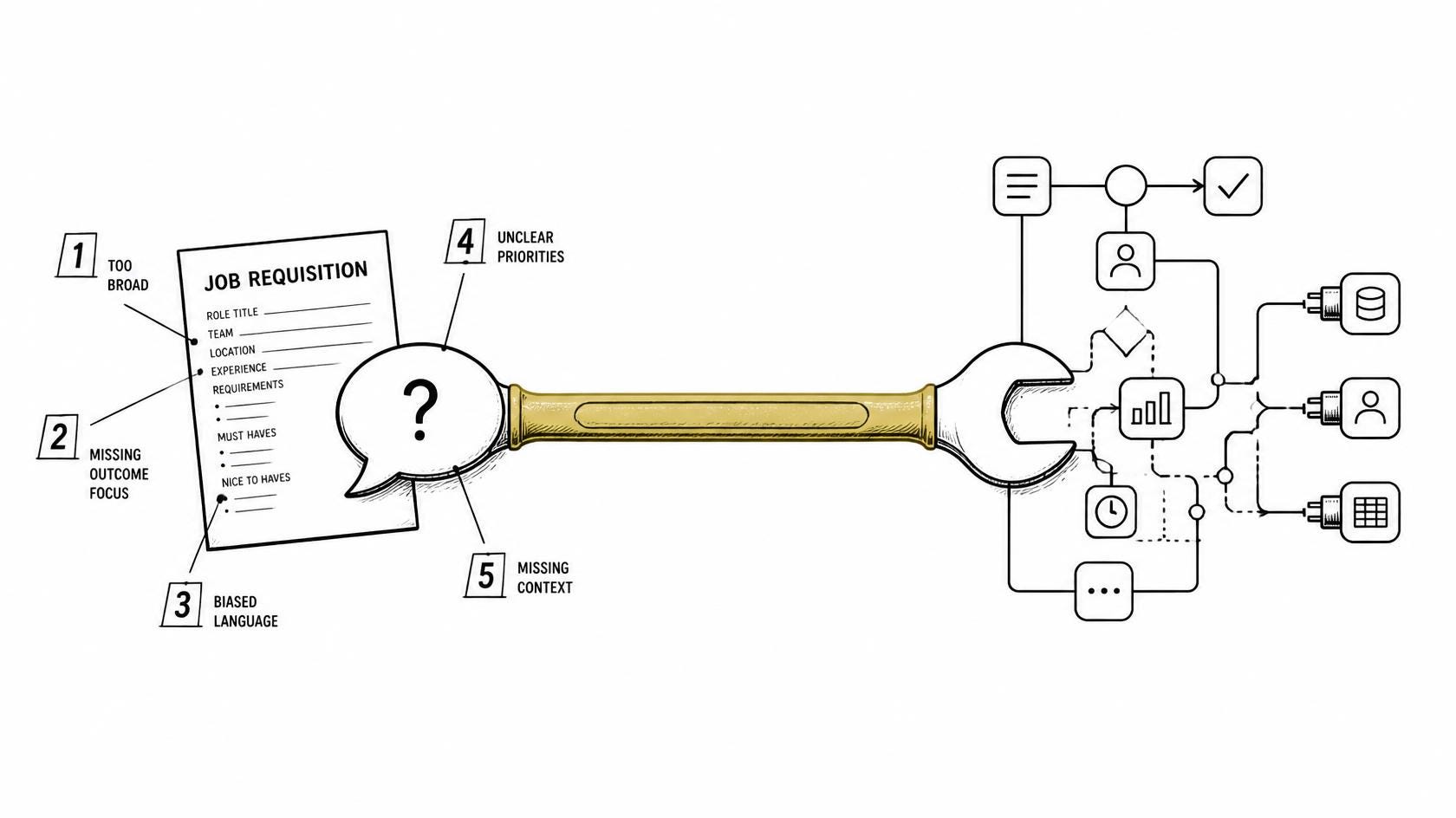
That role requires technical curiosity. A recruiter can learn enough without becoming a software developer, but systems can no longer stay mysterious. APIs, webhooks, permissions, data fields, model limits, audit logs, and simple workflow logic become useful recruiting knowledge.
Some recruiters will hate this work. Fair enough. Debugging why an automation skipped 27 candidates is a very different day from talking to a finalist about an offer.
I am also not sure the two paths will become clean job families everywhere. In a 70-person company, one good recruiter may still advise the CEO in the morning and fix an automation after lunch. The split may show up first in the work, then years later in titles and reporting lines.
The Future of Recruiting: Becoming a Talent Advisor Course
In this course you'll learn how to align recruiting with business goals, apply talent intelligence and AI insights to inform decisions, and consult and communicate with leaders and hiring managers using a skills-based approach. You'll also learn how to design future-ready roles, navigate build-vs.-buy decisions, and develop your own talent advisor brand and playbook.

Advisors change hiring decisions
The strongest Talent Advisor I can imagine spends less time proving they can find candidates and more time proving they can help a manager with the entire process.
That starts at intake. I would rather have a recruiter bring one uncomfortable market fact than 40 slides of labor-market decoration.
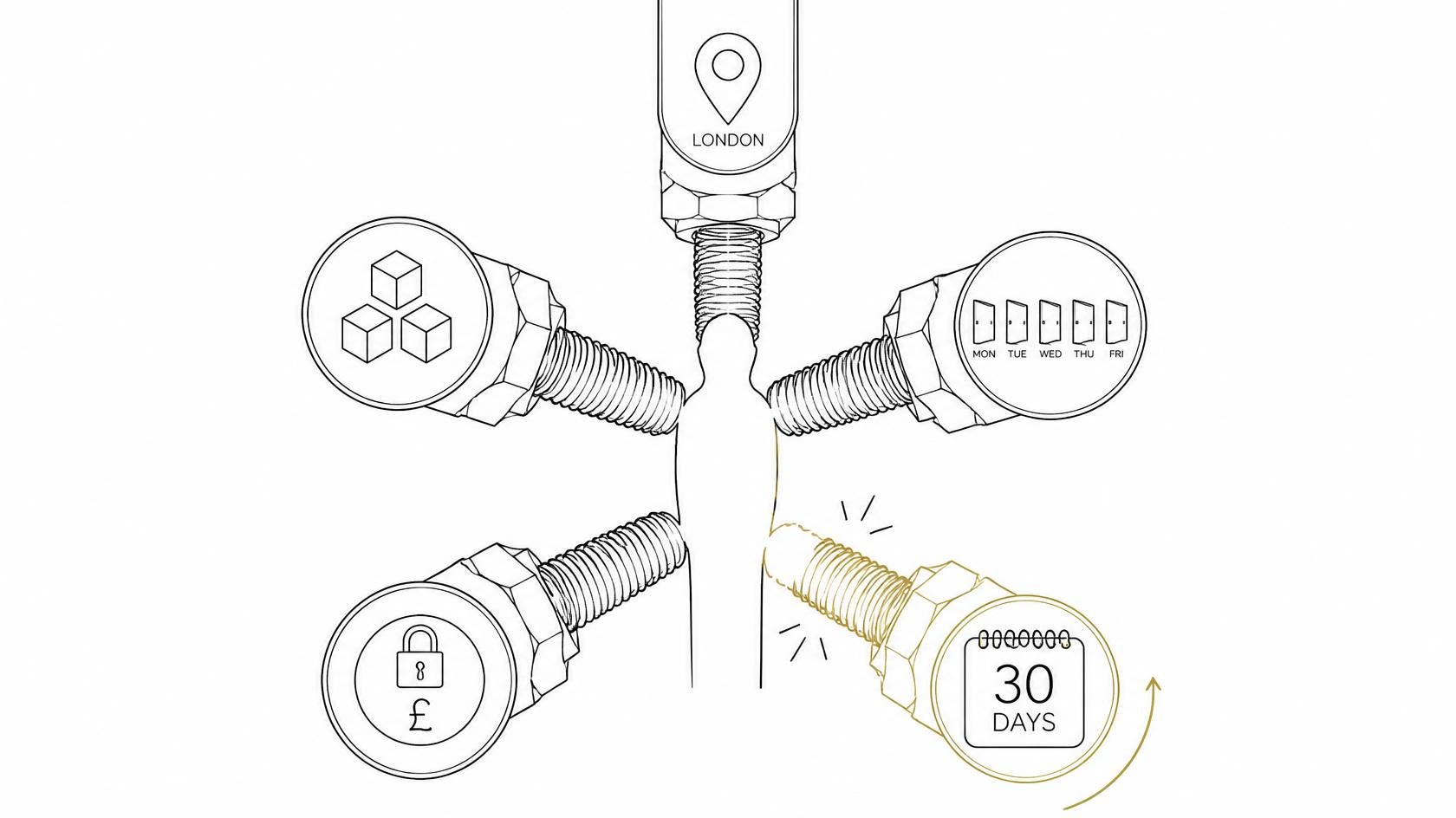
Suppose a hiring manager wants a lead engineer in London, requires five narrow technologies, expects five office days, offers a fixed salary, and wants someone hired in 30 days. A delivery recruiter accepts the brief and starts searching. An advisor tests the brief against the actual market before burning two weeks.
Maybe the office requirement cuts the reachable group. Maybe the salary misses the people with the required depth. Maybe one technology is a proxy for a skill the team really needs. The advisor works out which constraint can move, then gets the manager to choose.
That is decision work, and AI can make parts of it better. It can summarize talent pools, compare job descriptions, review interview notes for patterns, prepare questions, and model scenarios. It can also produce confident rubbish.
A field experiment with 758 Boston Consulting Group consultants gives a useful warning. On 18 tasks that fit GPT’s capabilities, people using AI completed 12.2% more tasks and worked 25.1% faster, with quality scores more than 40% higher. On a task deliberately placed outside the tool’s capability, AI users were 19 percentage points less likely to reach the correct answer.
Recruiting has plenty of tasks near that boundary. A model can summarize an interview transcript. Deciding whether the evidence supports a rejection is harder. It can find patterns in past hiring data. Deciding whether those patterns reflect job success or old bias is harder. It can suggest a salary argument. Sitting across from a finance leader and defending the budget is still yours.
This is where most people quit the advisory shift. They like the idea of influence until influence requires disagreement.
You will occasionally tell a senior manager, director, or VP that their preferred candidate does not meet the evidence collected in the process. You may have to say that the interview panel is the bottleneck. You may need to show that the “candidate shortage” appeared only after the company added a rule that excluded most of the market.
That costs social comfort. It can slow the relationship before it improves it, and sometimes it never improves.
Engineers build the recruiting system
Talent Engineering becomes interesting when you stop asking, “Which AI tool should recruiters use?” and start asking what should happen to a candidate, a hiring manager, and a piece of data as they move through the process.
The tool comes later.
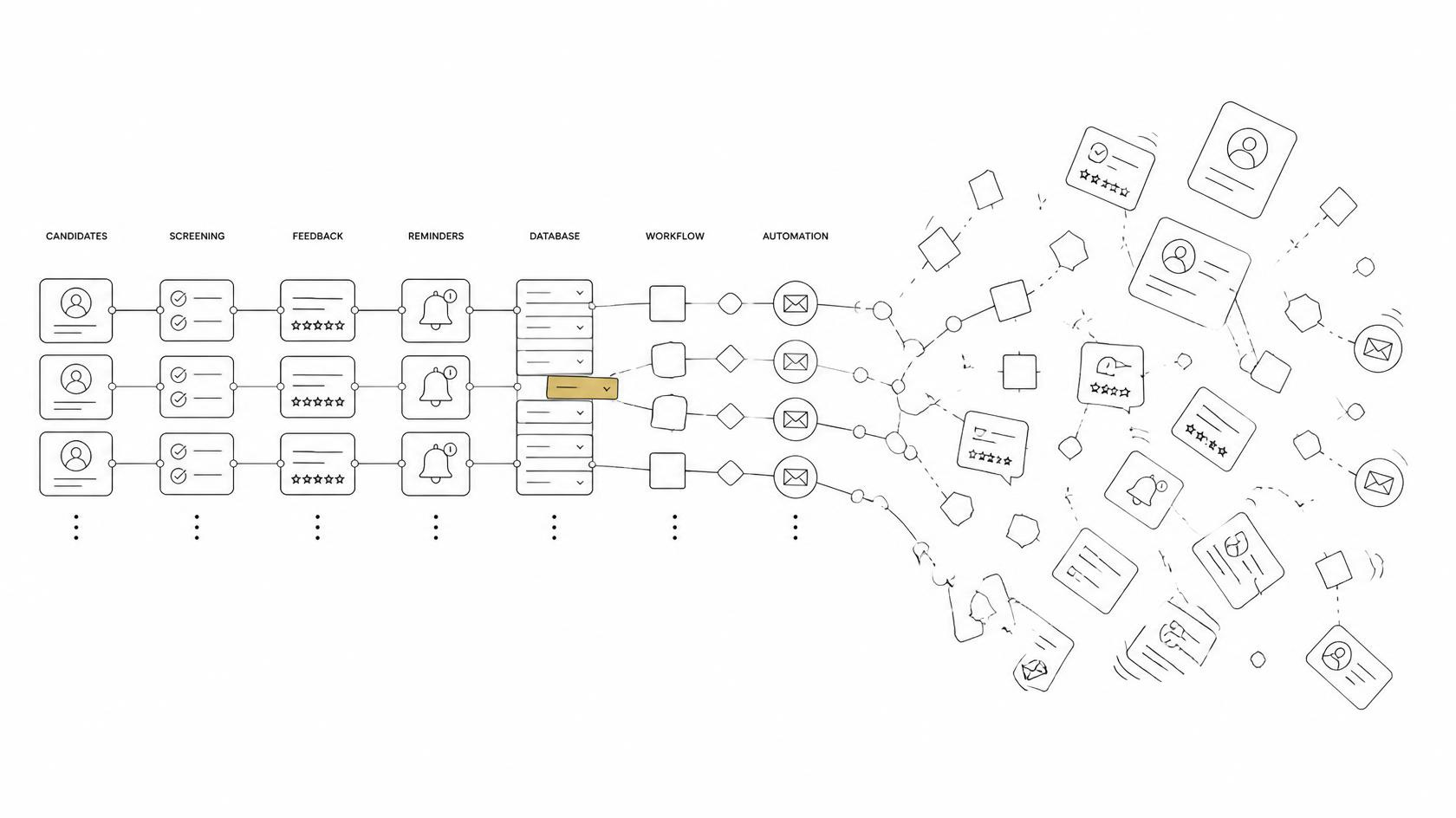
Consider interview feedback. Many teams still chase interviewers in Slack, Teams, or Google Meet, accept notes written hours (or days) later, copy summaries into an ATS, and then wonder why debriefs are weak. An engineer can redesign that flow: trigger the reminder at the right time, make the evidence fields easier to complete, flag missing feedback, summarize only after the original notes are saved, and keep a human responsible for the hiring judgment.
None of that is glamorous; a field mapping error can break the whole thing.
I once spent more time than I want to admit staring at an automation that looked correct while the wrong status value sat in one dropdown. That kind of work is humbling because the failure is often boring. The lesson is usually a field name, a permission issue, or a condition you forgot to test.
And AI adds a new class of failure. A workflow can run perfectly while the model inside it produces weak output.
Microsoft and Carnegie Mellon researchers surveyed 319 knowledge workers who gave 936 real examples of using generative AI at work. Higher confidence in AI was associated with less critical thinking. Higher confidence in one’s own ability was associated with more critical thinking, although people reported that it took more mental effort. The work shifted toward checking information and integrating answers, with people also supervising the task more actively.
That is close to the Talent Engineer’s real job. The person who builds AI into recruiting needs to assume that convenience changes behavior. If a polished candidate summary appears automatically, some recruiters will read the source notes less carefully. If an AI score or some AI evaluation sits beside an application, some people will start treating the number as evidence even when they cannot explain how it was produced.
So build friction where judgment deserves friction.
Make source evidence visible. Keep human approval on consequential decisions. Test false positives. Log model output. Give recruiters a way to challenge the system. Remove automation that saves 30 seconds but hides the information someone needs in order to think.
There is a separate conversation about legal rules, works councils, privacy, and automated employment decisions. I am skipping it here because it deserves more than a compliance paragraph bolted onto the end of an article about careers.
Your recruiter calendar will expose the shift
Keep your current title next month and look at your calendar instead. Ask what percentage of your week still depends on abilities that AI, workflow software, or manager self-service can copy.
Then move some time.
If you want the Advisor path, take one live requisition and go deeper before you source. Bring evidence about the market to the hiring manager.. Challenge one requirement. Ask what business result the hire must change. Review the interview process and find the place where judgment is weakest. Do enough of this that managers start pulling you into the conversation before the requisition exists.
If you want the Talent Engineer path, pick one repeated task that annoys your team and follow it end to end. Start by writing down where the data begins, who touches it, what decision happens, where people wait, and what error repeats. Automate one piece. Measure whether the failure moved somewhere else.
The annoying part here is that both paths require learning while you still have the old job. So you will not get some extra free time to learn; your requisitions will not politely disappear so you can study AI systems, data, finance, labor-market analysis, or better hiring decisions. You may need to do the new work beside the old work for months. Some companies will happily accept the extra value and keep your title, salary, and workload exactly where they were.
That is a real cost.
I would still start now, mostly because the old definition of recruiter gives you less room every year. Administrative work is being compressed. Basic content gets cheaper. Search gets easier; managers will gain more self-service. And candidates will use their own AI tools too, which means the recruiter cannot build authority by being the person in the process who knows how to generate text fastest.
What remains is harder to fake: judgment under messy evidence, the ability to change a hiring decision, the ability to build a recruiting process that survives strange behavior, and the ability to explain why a system made a recommendation.
I do not know which title companies will settle on. “Talent Engineer” may stick, or it may become another label that means five different jobs. “Talent Advisor” has already been used by teams where the role still looks like traditional recruiting.
Where do you see your own role heading: Talent Advisor, Talent Engineer, or somewhere between the two?


